

Author: Vivek V Kumar (MD, Lexicon World) is a marketing communications leader who has helped 100s of organisation enhance their reputation and bolster their sales with real world changes and messaging
In our previous discussion on the need for Chief Tourist Happiness Officer, we looked at the Atithi Paradox and the strange way our ancient culture of hospitality fails to show up on our modern city streets. Today, we need to talk about the language that every politician and every bureaucrat understands very well. We need to talk about money. Specifically, we need to talk about the massive amount of money our cities are losing every single day because we do not have a single person in charge of making people happy. In the world of business, experts call this friction. In the world of Indian tourism, we can call it the Hidden Tax of Chaos.
Imagine your city is like a bucket. The Central Government and the State Tourism Boards spend hundreds of crores of rupees every year on glossy advertisements and international roadshows to pour water into that bucket. This water represents the tourists. But because our cities are managed by ten different departments who never speak to each other, our bucket is full of holes. The water leaks out almost as fast as we pour it in. By the time the local shopkeeper or the youth looking for a job tries to get a drink, the bucket is nearly empty. This is not just a management failure. It is a direct theft from the pockets of every Indian citizen.
The first major leak is what we can call the Short Stay Drain. Think about a city like Paris or London. A tourist goes there and stays for five or six days because the city is easy to navigate and pleasant to walk in. Now think about a typical Indian heritage city like Agra or even Varanasi. Many tourists come in the morning, see the Taj Mahal or the evening Aarti, and they want to leave by the next bus. Why? Because the city experience is so exhausting that they just want to flee to the safety of a hotel in another city. If a Tourist Happiness CEO could fix just the basic things like clean walkways and honest transport, and that tourist stayed just one extra night, the local economy would see its revenue double instantly. One extra night means an extra dinner, an extra auto ride, an extra souvenir bought, and an extra day of wages for hotel staff. We are losing crores every week simply because our cities are too tiring to enjoy for more than twelve hours.
Then we have the Evening Economy Leak. In global tourism hubs, the real business starts after the sun goes down. People want to walk through lit up markets, eat street food without worrying about hygiene, and watch local musicians perform. In most Indian cities, the moment the main monument closes at six in the evening, the tourist areas become dark, confusing, and sometimes unsafe. We lose the entire revenue of the night. A Tourist Happiness CEO would have the power to create well lit, safe, and vibrant night zones where local artists can perform and street vendors can sell their goods in a clean environment. Right now, that money is simply staying in the tourist’s pocket because we haven't given them a reason to spend it.
But the biggest cost of this chaos is paid by you, the local resident. People often think that tourism is only for the outsiders. This is a complete misunderstanding. When a Tourist Happiness CEO is given the power to fix a city, the local people are the first ones to benefit. If a sidewalk is repaired so a tourist can walk comfortably, your own grandfather can walk to the park without tripping. If the street lighting is improved to make a woman traveller feel safe, the women of your own neighbourhood are safer too. When we talk about a Return on Investment or ROI, we are not just talking about foreign exchange. We are talking about the quality of life for every person living in that city.
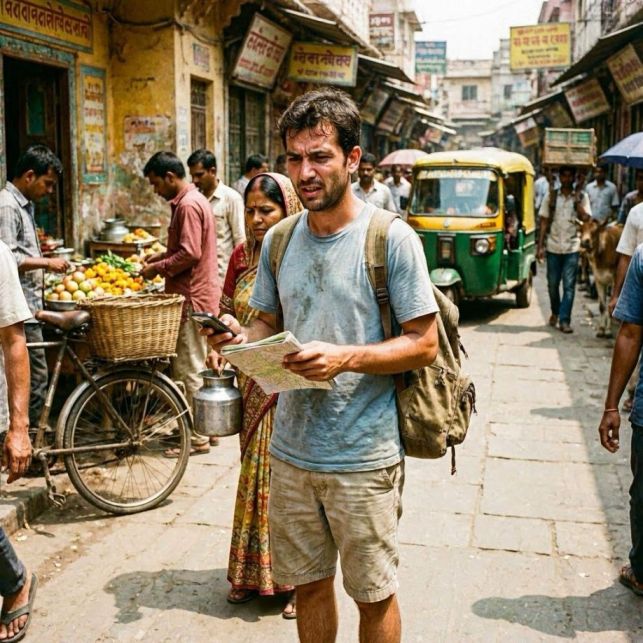
Currently, our tourism boards are busy counting how many people visited a monument. This is a useless number. We should be counting how many people smiled. We should be counting how many minutes they spent in our markets. A happy tourist is the best advertisement a country can have. They post photos on Instagram and they tell their cousins to visit. But a frustrated tourist is a walking anti-advertisement. Every time someone is cheated by a tout or gets stuck in a filth-covered lane, we pay a hidden tax. We pay it in the form of lost jobs for our youth. We pay it in the form of struggling local businesses. We pay it in the form of a city that feels like a mess instead of a home.
The government must realize that tourism is not a department. It is a product. And every product needs a CEO who is responsible for the final result. If the Central and State governments really want to make India a global superpower, they must start by plugging the holes in the bucket. They must appoint a leader who sees a broken tile or a pile of garbage not as a minor municipal issue, but as a financial loss to the nation. It is time to stop paying the Tax of Chaos and start investing in the Wealth of Happiness.
In our next article, we will go on a journey. We will follow a tourist for twenty-four hours to see exactly where the friction starts and how a Happiness CEO would fix it in real time.